

How VW warning lights work: the color code
Every Volkswagen vehicle, from the Golf and Polo to the Tiguan, Passat, Volkswagen Jetta and the electric ID. models, uses the same traffic-light logic on the instrument cluster. Newer VWs with the Digital Cockpit also show a text message under the symbol, such as "Brake system: Stop the vehicle!" or "Engine oil: please check level".

A light that flashes is usually more urgent than one that stays on. A flashing check engine light, for example, signals a misfire that can damage the catalytic converter.
When you turn on the ignition, most lights come on for a few seconds as a bulb and self-test. That's normal. A light that stays on after the engine starts, or comes on while driving, is what you need to act on.
Red VW warning lights: stop safely
Red lights point to faults that can damage the engine or affect your safety. Don't ignore them, and don't simply clear the code and keep driving.
Coolant temperature / coolant level warning (red thermometer in liquid)
What it means: The coolant temperature is too high, or the coolant level is too low. On many VW models, the same symbol covers both, and the text message tells you which.
What to do:
- Pull over safely and switch off the engine.
- Wait at least 30 minutes for the engine to cool. Never open the coolant expansion tank cap while the engine is hot, as the coolant is under pressure.
- Check the coolant level against the MIN/MAX marks on the expansion tank.
- Top up with the coolant type specified for your car (VW uses G12/G13-family coolants, check your owner's manual). Don't mix types.
- If the light comes back or the level keeps dropping, there may be a leak, a failed water pump or a faulty thermostat. Book a check at a Volkswagen service center or a trusted workshop.
With Carista, you can watch the coolant temperature in live data while you drive, which helps you spot a cooling problem before the warning light ever comes on.

Oil pressure warning (red oil can)
What it means: Engine oil pressure is too low. This isn't the same as a low oil level warning (that one is yellow). Low oil pressure means the engine isn't being lubricated properly.
What to do: Stop the car as soon as it's safe and switch off the engine immediately. Driving even a short distance without oil pressure can destroy the engine. Check the oil level with the dipstick or the oil level display in the infotainment menu. If the level is fine and the light stays on, don't drive the car. Have it towed for inspection.

Brake system warning (red circle with "!" or "BRAKE")
What it means: One of three things:
- The parking brake is engaged.
- The brake fluid level is too low.
- There's a fault in the brake system, often together with the ABS light.
What to do: First, make sure the parking brake is fully released. If the light stays on, stop safely and check the brake fluid reservoir. Low brake fluid usually means worn brake pads or a leak. Don't drive if the brake pedal feels soft or goes further down than usual. If the red brake light and the yellow ABS light are on together, the braking system may be seriously affected, so get the car to a workshop without delay.

Charging system / battery warning (red battery symbol)
What it means: The charging system isn't charging the 12V battery, usually because of a faulty alternator, a broken drive belt or a wiring problem.
What to do: Turn off non-essential electrical consumers (seat heating, rear window heating, infotainment) and drive straight to a workshop. Your car is running on battery power alone and can stall once the battery is drained. If the light came on together with the coolant warning, stop immediately, because a broken drive belt may also stop the water pump on some engines.
Carista's battery info and live data show battery voltage, so you can check whether the alternator is charging when the engine runs (a healthy system typically reads around 13.8–14.7 V).

Steering warning (red steering wheel with "!")
What it means: The electromechanical power steering has failed, or the steering column lock has a fault.
What to do: Stop safely. If the power steering assist is failing, the wheel becomes much heavier to turn, which is dangerous at low speeds and when parking. Switch the ignition off, wait a moment and restart. If the light stays red, don't drive. Contact a Volkswagen service center or roadside assistance.
Transmission overheating
What it means: On VWs with a DSG or automatic gearbox, a red gearwheel symbol usually means the transmission is overheating.
What to do: Stop safely, put the car in P with the engine running for a few minutes so the oil can cool, then continue only when the light goes off. Avoid stop-start traffic and steep climbs until it's checked.

Airbag / seat belt warning
The red seat belt symbol simply means someone in the car isn't buckled up. The airbag (SRS) light is covered under yellow lights below.
Yellow VW warning lights: check soon
Yellow lights point to system malfunctions that don't need you to stop immediately but shouldn't be ignored. Many of these faults get worse, and more expensive, the longer you drive with them.
Check engine light (yellow engine outline)
What it means: The engine management or emissions system has stored a fault. Causes range from a loose fuel cap to a faulty oxygen sensor, ignition coil or catalytic converter.
What to do: If the light is steady, you can usually drive on carefully, but get the fault code read soon. If it flashes, there's an active misfire: reduce speed, avoid heavy acceleration and get it checked as soon as possible.
This is where an OBD2 scanner like Carista earns its keep. Reading the code tells you whether it's a €0 fix (tighten the fuel cap) or a workshop job.

Read more: Reset Your Check Engine Light in Minutes
EPC light (yellow "EPC")
What it means: EPC stands for Electronic Power Control, a VW Group warning tied to the throttle, the accelerator pedal sensor, the brake light switch or engine management. The car may go into limp mode with reduced power.
What to do: Drive gently to a safe place, switch off and restart. If the EPC light stays on, read the fault codes. Common causes include a faulty brake light switch, throttle body issues or sensor faults. A throttle body adaptation (available in Carista for many VW models) can sometimes resolve throttle-related EPC faults after cleaning or replacement.

Low engine oil level (yellow oil can with a wavy line)
What it means: The oil level is getting low. Unlike the red oil pressure light, this one isn't an emergency, but don't put it off.
What to do: Check the oil level and top up with the engine oil that meets your VW's specification (for example VW 502 00, 504 00 or 508 00, depending on the engine). The required spec is in the owner's manual or on the oil filler cap. Many VW engines burn a small amount of oil between services, so checking every few fill-ups is good practice. A yellow oil symbol with "sensor" text instead means the oil level sensor itself is faulty.
ABS warning (yellow "ABS" in a circle)
What it means: There's a fault in the anti lock brakes system, often a failed wheel speed sensor, a damaged sensor ring or a wiring fault.
What to do: Your normal brakes still work, but the wheels can lock under hard braking, especially on wet or icy roads. Drive carefully, leave more distance and get the ABS code read. With Carista's wheel speed live data, you can see which wheel sensor is reporting wrong values.

Read more: ABS Warning Light: What It Means and How to Fix It
Traction control / ESC (yellow car with skid marks)
What it means:
- Flashing while driving: the electronic stability control or traction control system (ASR) is actively working to stop wheel spin. That's normal on slippery roads.
- Steady: there's a system malfunction in ESC/ASR, often linked to the same wheel speed sensor that triggers the ABS light.
- With "OFF": the system has been switched off manually.
What to do: If it flashes, ease off the accelerator. If it stays on, drive more carefully and get the fault codes checked.
Tire pressure light (yellow horseshoe with "!")
What it means: One or more tires have lost pressure. Many VWs use an indirect system that compares wheel speeds, so it may not tell you which tire.
What to do: Check all four tires (and the spare, if you have a pressure-monitored spare) with a gauge when the tires are cold, and inflate to the values on the sticker inside the fuel filler flap or door jamb. Then reset the system: on most VWs, go to Vehicle > Settings > Tires > Tire pressure monitoring > SET in the infotainment menu, or use the TPMS button. Carista also offers a TPMS reset for many VW models. If the tire pressure light comes back within a few days, you probably have a slow puncture.

Airbag / SRS warning (yellow airbag symbol)
What it means: There's a fault in the airbag or seat belt pretensioner system. Common causes are seat connector issues (especially after moving seats), clock spring faults or a low battery during startup.
What to do: Get it checked soon. With the light on, the airbags may not deploy in a crash. Carista can read SRS fault codes on supported VW models.
Power steering assist reduced (yellow steering wheel)
What it means: Steering assist is reduced or there's a non-critical fault in the power steering system. A yellow steering wheel can also appear after a battery disconnect, and it often clears after a short drive or turning the wheel lock-to-lock.
What to do: If steering feels heavy or the light stays on after a restart, book a check. If it turns red, stop.

Brake pad wear (yellow circle with dashes)
What it means: The brake pads have reached their wear limit.
What to do: Plan a brake pad replacement soon. On VWs with an electronic parking brake, the rear calipers need to be put into service mode before replacing pads. Carista's EPB reset function supports this on many models.
Automatic transmission malfunction (yellow gearwheel)
What it means: The gearbox control unit has detected an automatic transmission malfunction. You may notice jerky shifts or the car staying in one gear (limp mode).
What to do: Avoid heavy loads and towing, and get the transmission fault codes read. Carista's transmission live data lets you check gearbox oil temperature and other values on supported models.
Bulb failure / lighting system (yellow bulb with "!")
What it means: A fault in the exterior lighting system, usually a blown bulb in a headlight, brake light, indicator or number plate light.
What to do: Walk around the car with the lights on (and have someone press the brake pedal) to find the failed bulb. On LED lights, the whole unit may need replacing.
Diesel-specific lights
- Glow plug (yellow coil): Normal for a few seconds on cold start. If it flashes while driving, there's an engine management fault.
- Diesel particulate filter, DPF (yellow box with dots): The DPF is filling up. Drive at steady speed above roughly 60 km/h (40 mph) for 15–20 minutes to help it regenerate. Carista shows DPF info on supported diesels.
- AdBlue / DEF (yellow fluid drop): The AdBlue tank is running low. Top up soon, because the car may refuse to restart once the tank is empty.
Hybrid system and EV warnings
On plug-in hybrids (GTE / eHybrid models) and electric ID. models, you may see a hybrid system or drive system message such as "Hybrid system: fault, please contact workshop" or "Electric drive: fault". A yellow message means reduced function; red means stop safely. These high-voltage systems should only be serviced by a qualified workshop, but reading the stored codes first tells you how urgent it is.
Service due (wrench or "SERVICE" message)
What it means: Your oil change or inspection interval is due. It's a reminder, not a fault, and a good prompt for scheduling service before the interval runs out. Once the service is done, the indicator needs to be reset. Carista's service indicator reset does this from your phone on supported VWs.

Read more: How to Reset the Oil Life / Service Light
Green and blue VW dashboard lights
These only confirm that a feature is working:
- Green arrows: turn signals
- Green headlamp: low beam or parking lights
- Blue headlamp: high beam
- Green "A" in a circle: start-stop system is active (engine has stopped at idle)
- Green speedometer: cruise control or adaptive cruise control (ACC) active
- Green car between lines: Lane Assist is active
- Green "READY" (hybrids and EVs): the car is ready to drive
VW warning lights at a glance

How to find out exactly why a VW warning light is on
The symbol tells you which system has a problem. It doesn't tell you why. That information is stored as a diagnostic trouble code (DTC) in the control module. A generic code reader only sees engine codes, while a VW-specific scanner also reaches the ABS, airbag, transmission, steering and body modules.
Diagnosing VW warning lights on the go with Carista
Carista is an official VW Group partner, so the Carista app with the Carista EVO Bluetooth scanner can read VW-specific modules, including newer models protected by SFD and SFD2. Plug the scanner into the OBD2 port (under the dashboard on the driver's side), connect with your phone, and in a few minutes you'll see:
- Full-system diagnostics: fault codes behind the engine, EPC, ABS, airbag/SRS, transmission, TPMS, HVAC and other warning lights, with plain-language explanations.
- AI diagnostics: help understanding what a code means, its likely causes and how urgent it is.
- Live data: coolant and oil temperature, engine RPM, battery voltage, fuel trims, wheel speeds, turbo and transmission data, so you can watch a problem as it happens.
- Service functions: service indicator reset, TPMS reset, EPB service mode for brake pad changes, battery registration and DPF regeneration, depending on the model.
- Car Diary: a log of every scan, repair and service, which is handy when you talk to a workshop or sell the car.
Read more: Track Every Car Repair & Service in One App
Unlock More with the Carista Bundle
€109,99
- EVO OBD2 Scanner & 12-month PRO access included
- Our best scanner yet
- Trusted by 3M+ Drivers Worldwide
- VW Group's Official Partner
- 200+ Hidden Features
- FREE Shipping & 2 Year Warranty
Everything you need in a single order.
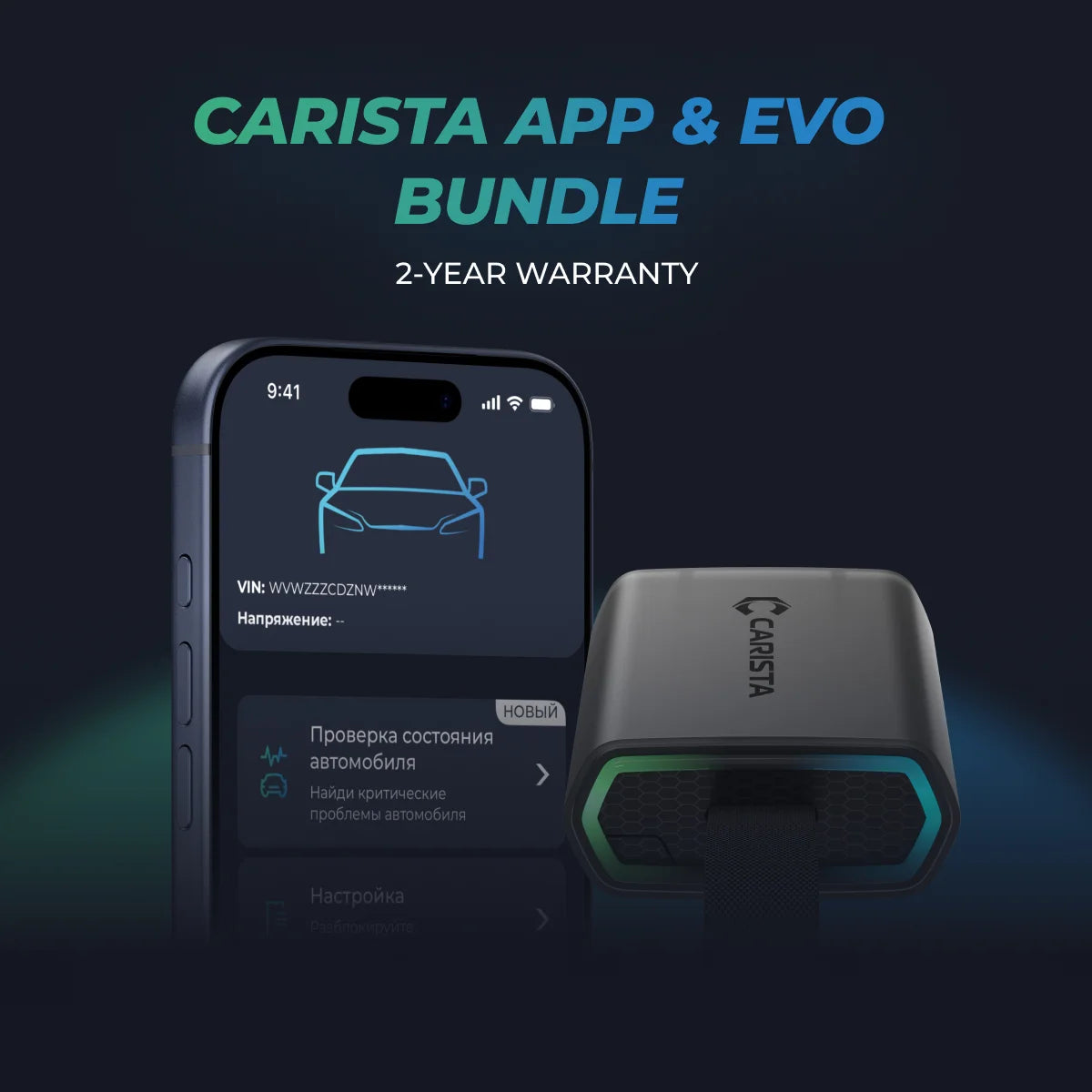
This matters most when a yellow light comes on mid-trip. Instead of guessing, you can check the code at the roadside and decide whether to keep driving, top something up or head straight to a Volkswagen service center. For red warnings, use Carista to understand the fault, not to clear it and carry on.
Feature availability varies by model, year and installed modules. Check your exact car on Carista's supported cars page for Volkswagen.
When to book a Volkswagen service center
Book a workshop visit (or call roadside assistance) when:
- Any red warning stays on after a restart.
- The red brake light and yellow ABS light come on together.
- The check engine light is flashing.
- Coolant, brake fluid or oil levels keep dropping after topping up.
- A hybrid system or high-voltage warning appears on a GTE, eHybrid or ID. model.
- A yellow warning keeps returning after you've cleared the code.
FAQ
What do the colors of VW warning lights mean?
Red means a serious fault: stop safely. Yellow means a system malfunction to check soon. Green and blue only show that a feature is on.
Which VW warning lights mean I should stop driving immediately?
Stop as soon as it's safe for the red oil pressure light, red coolant temperature light, red brake system light (when the parking brake is off), red steering light, red gearwheel and a flashing check engine light with rough running.
What's the difference between the red and yellow oil lights on a VW?
The red oil can means low oil pressure, so switch the engine off right away. The yellow oil can with a wavy line means the oil level is low, so top up with the correct engine oil soon.
Why are the ABS and traction control lights on at the same time on my VW?
Both systems use the same wheel speed sensors. When one sensor fails, the ABS light and the traction control system light usually come on together. Reading the ABS module code shows which wheel is affected.
Why does my VW tire pressure light stay on after inflating the tires?
The system needs a reset after you adjust the pressures. Use the SET option in the tire settings menu, the TPMS button, or a scanner such as Carista. If it returns within days, check for a slow puncture.
Can a weak battery trigger VW warning lights?
Yes. Low voltage during startup can make several lights come on at once, such as ABS, ESC, steering and EPC. If they appear together after a cold start or a battery change, check the battery and the charging system first.
Can I check VW warning lights with my phone?
Yes. With a Bluetooth OBD2 scanner such as Carista EVO and the Carista app, you can read VW-specific fault codes, view live data like coolant temperature and battery voltage, and run service resets from your phone.
How much does it cost to diagnose a VW warning light?
Workshop diagnostic fees vary by country and garage. Reading the codes yourself with an OBD2 scanner first helps you know what you're dealing with before you book a Volkswagen service center.
*Disclaimer: The information provided in this article is intended for educational and informational purposes only and should not be considered as professional advice. While we strive to provide accurate and up-to-date content regarding OBD2 tools, diagnostics, and related automotive issues, the specifics of each vehicle may vary.
*Always consult your vehicle’s manufacturer guidelines and consider seeking professional assistance when dealing with complex or critical diagnostic issues.