If you want to reset the check engine light, treat it as a diagnostic process—not a button you press and forget.
That warning comes from your vehicle’s onboard diagnostic system (OBD-II). It monitors your car engine, emissions, and key sensors in real time. When something falls outside factory parameters, it stores trouble codes and turns the light on.
Sometimes the cause is minor — a loose gas cap. Other times, it’s a failing mass airflow sensor, worn spark plug, faulty oxygen sensor, or a degraded catalytic converter.
The rule is simple: don’t just reset your check engine light — identify and fix the problem first.
What causes the check engine light?
Your ECU (engine control unit) flags faults when sensor data deviates from expected ranges. Below are the most common triggers you’ll encounter:
Loose gas cap
A loose gas cap affects fuel system pressure and emissions control.
- Triggers EVAP system codes
- Quick fix: tighten until it clicks
- Often resolves after a few drive cycles
Faulty oxygen sensor
A faulty oxygen sensor sends incorrect air-fuel ratio data.
- Reduces fuel economy
- Increases emissions
- Can overwork and damage the catalytic converter
Mass airflow sensor issues
The mass airflow sensor calculates incoming air volume.
When it fails:
- Air-fuel mixture becomes incorrect
- Engine hesitates or stalls
- Fuel consumption rises
Worn spark plug
A worn spark plug leads to incomplete combustion.
- Causes misfires
- Reduces engine efficiency
- Can trigger multiple cylinder-related trouble codes
Catalytic converter problems
The catalytic converter reduces harmful emissions.
Failure results in:
- Reduced engine performance
- Increased exhaust restriction
- High replacement cost ($1,000–$2,500+)

What does a flashing check engine light mean?
A flashing check engine light is a critical fault — not a warning you delay.
It usually indicates an active misfire. That can:
- Overheat and destroy the catalytic converter within minutes
- Cause long-term damage to the car engine
- Lead to repair costs exceeding $2,000
Understanding onboard diagnostics (OBD-II)
Every modern vehicle runs an onboard diagnostic system.
When a fault occurs:
- The ECU generates trouble codes
- Codes are stored in memory
- You retrieve them via the OBD II port
These codes are standardized (e.g., P0171, P0300) and point directly to the system affected.
Without reading these codes, any attempt to reset your check engine light is guesswork.
Methods to reset the check engine light
There are several methods to reset the light. Only one is technically correct.
Using an OBD2 scanner (recommended)
This is the proper method.
Steps:
- Connect the scanner to the OBD2 port
- Turn ignition ON
- Read stored fault codes
- Diagnose and fix the problem
- Clear codes to reset the check engine light
This method ensures you are not masking an active fault.
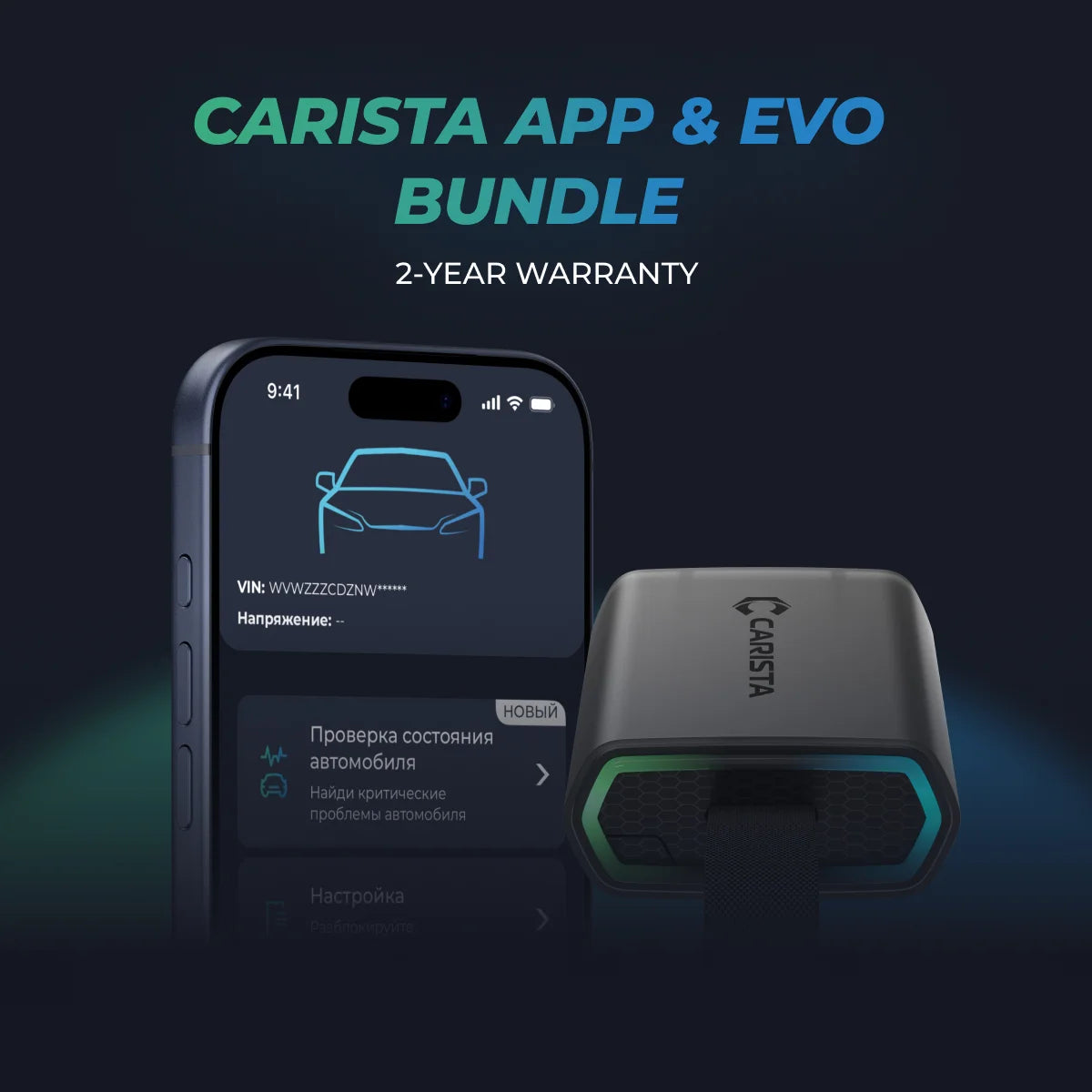
Unlock More with the Carista Bundle
£69.99
- EVO OBD2 Scanner & 12-month PRO access included
- Our best scanner yet
- Trusted by 3M+ Drivers Worldwide
- VW Group's Official Partner
- 200+ Hidden Features
- FREE Shipping & 2 Year Warranty
Everything you need in a single order.
2. Disconnect the negative battery terminal
You can disconnect the negative battery cable.
- Wait 10–15 minutes
- Reconnect battery
Effect:
- Clears ECU memory
- May turn off the light
Limitations:
- Resets vehicle settings
- Does not resolve the fault
- Light often returns
3. Driving cycles (system reset)
The system may reset automatically after multiple drive cycles.
- Works only if the issue is temporary
- Requires consistent normal operation
Limitations:
- Slow (days or weeks)
- Ineffective for real faults
Important warning
Resetting the light is not a repair.
If you don’t fix the problem:
- The system will trigger the light again
- The issue may escalate
- Repair costs increase
If the fault persists, have the vehicle checked by a mechanic or certified technicians.
Diagnose smarter with Carista AI Diagnostics
Instead of guessing or paying $300 at a service center, you can use Carista — now with built-in AI Diagnostics.
Here’s where most drivers get stuck: fault codes like P0171 or P0300 don’t mean much on their own.

This is exactly where AI Diagnostics gives you a real advantage.
Instead of guessing, you get:
- Clear, human explanations of fault codes
- Immediate understanding of the issue
- Actionable steps to fix it
Key benefits of AI Diagnostics
-
Easy-to-understand car fault codes
You don’t decode technical jargon — AI explains it in plain language. -
Saves time and reduces confusion
No forums, no guesswork, no trial and error. -
Smarter troubleshooting
You don’t just identify the issue — you understand how to fix it. -
Built for everyday drivers
No mechanical background required.
-
Better repair decisions
You know: -
How serious the issue is
-
What caused it
-
What it may cost
Learn more: AI Diagnostics
No technical background required. You get the same essential data a service center reads — without the cost.
When to visit a service center
There are clear cases where DIY is not appropriate.
Go to a service center if:
-
The light returns after you reset the check engine
-
You see a flashing check engine light
-
Engine performance drops
-
You cannot identify or fix the problem
Persistent faults require proper inspection by certified technicians.
Conclusion
To reset the check engine light correctly, follow a structured process:
-
Read the trouble codes
-
Diagnose the fault
-
Fix the problem
-
Reset the system
Common causes include:
-
Loose gas cap
-
Faulty oxygen sensor
-
Mass airflow sensor failure
-
Worn spark plug
-
Catalytic converter issues
Resetting without repair is not a solution — it’s a delay.
Use the right tools, avoid unnecessary service center visits, and keep your car engine operating within spec.
FAQ
Can I reset the check engine light myself?
Yes. With an OBD2 tool, you can read codes and reset the check engine light after you fix the problem.
Is it safe to drive with the check engine light on?
If steady, short driving is usually acceptable. If it’s a flashing check engine light, stop immediately.
Why won’t my check engine light turn off after reset?
Because the issue still exists. The system detects it again and reactivates the light.
How long does it take for a check engine light to reset?
Driving cycles can take days. With Carista, you can reset your check engine light immediately after repair.
Does disconnecting the battery reset the check engine light?
Yes, but it’s not reliable. It clears memory, not the root cause.
*Disclaimer: The information provided in this article is intended for educational and informational purposes only and should not be considered as professional advice. While we strive to provide accurate and up-to-date content regarding OBD2 tools, diagnostics, and related automotive issues, the specifics of each vehicle may vary.
*Always consult your vehicle’s manufacturer guidelines and consider seeking professional assistance when dealing with complex or critical diagnostic issues.