

How much horsepower does your car actually produce?
The number listed by the manufacturer gives you a useful reference point, but it doesn't necessarily tell you how your engine performs today. Vehicle age, maintenance, modifications, fuel, temperature, altitude, and other real-world conditions can all affect performance.
That's where a dyno test comes in.
Traditionally, testing a car's horsepower and torque requires a professional dynamometer — commonly called a dyno — and a visit to a specialized workshop. But new technology is making performance testing more accessible.
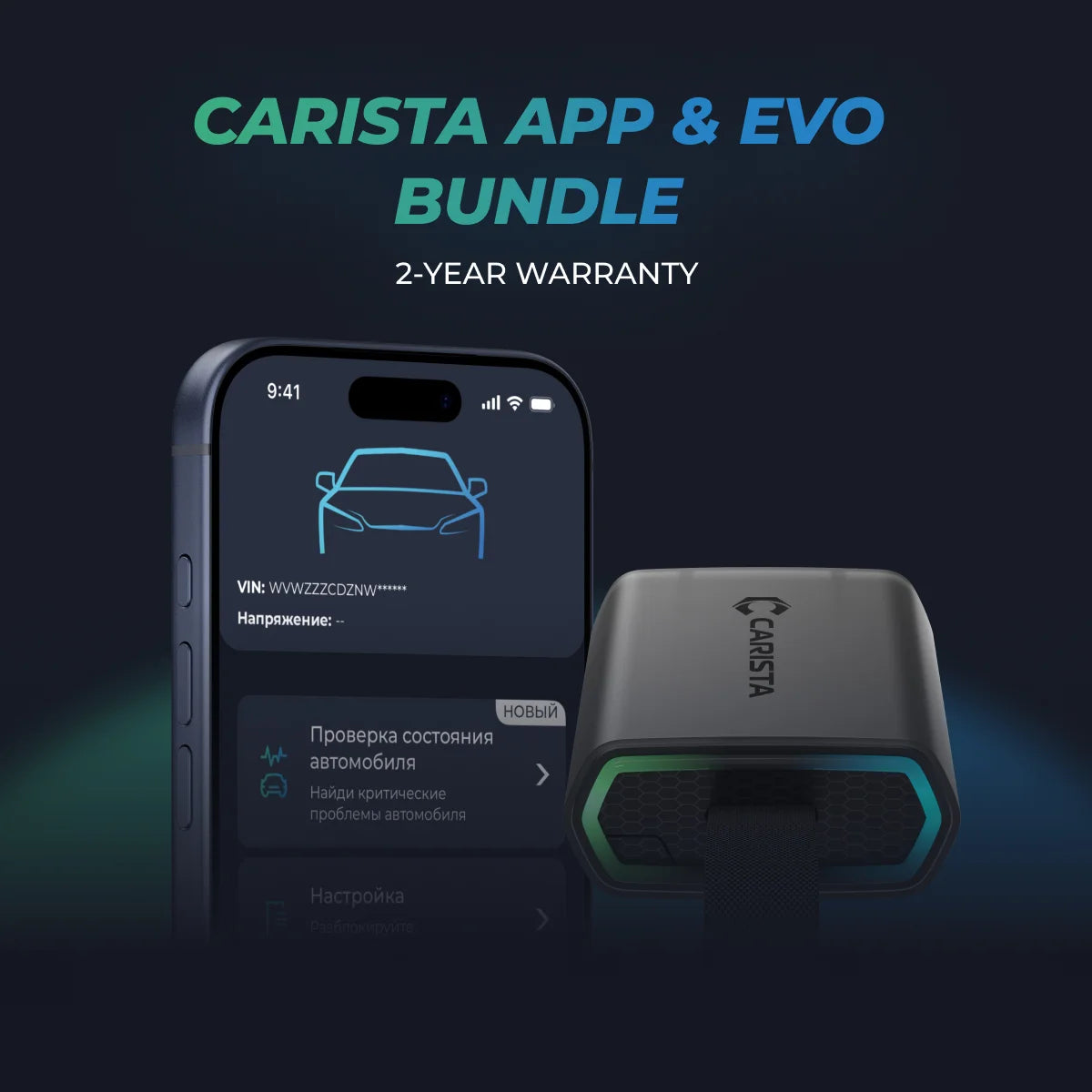
With the Carista Dyno Test, you can estimate your engine's peak horsepower and torque from a real acceleration run using live OBD2 data and information about your vehicle.
Here's what a dyno test does, how it works, what the numbers mean, and how you can use Carista to get insights into your car's real-world performance.
What Is a Dyno Test?
A dyno test is a performance test used to determine how much power and torque an engine produces.
The name comes from a dynamometer, or dyno — a device used to measure force, torque, and power.
In automotive testing, dynos are commonly used to answer two important questions:
- How much horsepower does the car produce?
- How much torque does the car produce?
Professional workshops and tuning specialists often use dyno testing to measure vehicle performance, diagnose performance issues, establish a baseline, and evaluate changes after engine modifications or ECU tuning.
What Does a Dyno Test Measure?
The two figures most drivers are interested in are horsepower and torque.
Horsepower (HP): Horsepower represents how quickly an engine can perform work.
In practical terms, horsepower is closely associated with a vehicle's ability to continue accelerating as engine speed increases.
A dyno test can identify the peak horsepower produced during a test run.
Torque (Nm): Torque measures rotational force.
For an engine, it describes the turning force generated by the engine and is commonly expressed in Newton-metres (Nm).
Higher torque can contribute to stronger acceleration and pulling power, particularly at lower engine speeds.
Horsepower and torque are related rather than completely separate measurements. Looking at both provides a more useful picture of engine performance than focusing on horsepower alone.

How Does a Traditional Dyno Test Work?
There are two common types of professional automotive dynamometers.
Chassis Dyno or Rolling Road Dyno: A chassis dyno, often called a rolling road, tests the vehicle while it is positioned on large rollers.
The driven wheels turn the rollers as the vehicle accelerates. Sensors measure the force being transferred through the wheels, allowing the dyno system to calculate the vehicle's performance.
One important distinction is that a chassis dyno measures performance through the vehicle's drivetrain.
Some of the engine's power is lost before it reaches the wheels because of the transmission, differential, drivetrain components, tires, and other mechanical factors.
Engine Dyno: An engine dyno works differently.Instead of testing the entire vehicle, the engine itself is removed and connected directly to dynamometer equipment.This allows performance to be measured directly at the engine rather than through the vehicle's complete drivetrain.Engine dynos are therefore mainly used in specialized engine development, motorsport, tuning, and testing environments.
Why Do a Dyno Test?
Dyno testing isn't only about discovering the biggest horsepower number possible. One of its most useful applications is comparison.
For example, you can establish a performance baseline and then compare it against another test after making changes to the vehicle.
This can be useful after:
- an ECU remap or tune;
- intake or exhaust modifications;
- engine hardware upgrades;
- maintenance or repairs;
- changes to the vehicle's setup.
Testing can also help you understand whether a modified car is performing differently from before.Can You Do a Dyno Test Without a Dyno?
A professional dynamometer physically measures performance using dedicated equipment. However, it is also possible to estimate engine performance using real-world acceleration data.
That's the approach behind the Carista Dyno Test.
Instead of putting your car on a set of rollers, Carista analyzes a real acceleration run.
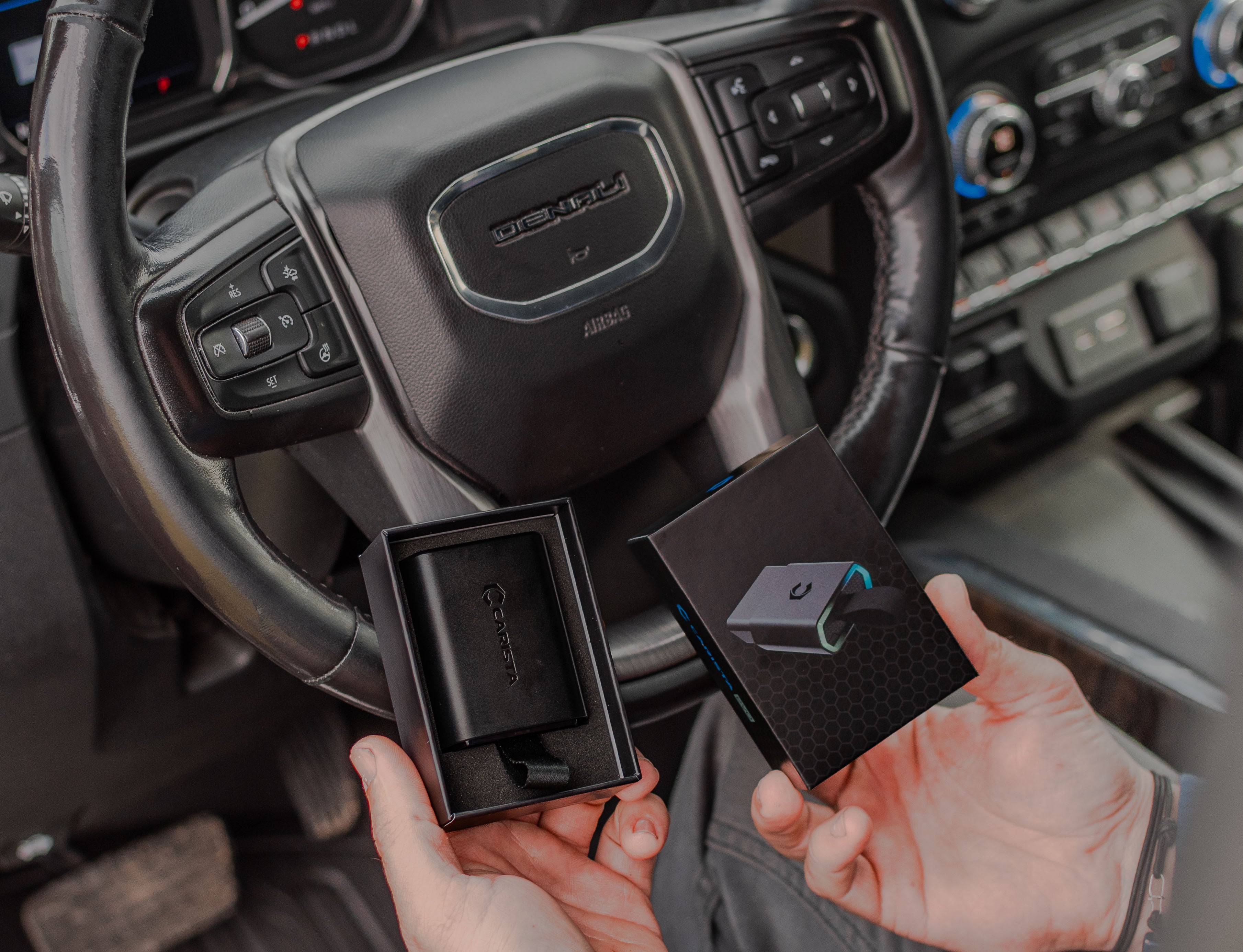
The tool combines live vehicle speed and engine RPM data from the car's OBD2 system with information about the vehicle and test conditions to estimate peak engine horsepower and torque.
This means you can get a useful performance estimate without scheduling a traditional rolling-road dyno session.
Introducing the Carista Dyno Test
The Carista Dyno Test is a new feature that estimates your engine's peak horsepower (HP) and torque (Nm) from a single full-throttle acceleration run.
You'll find the Dyno Test under Service Tools in the Carista app.
Instead of relying on acceleration alone, the calculation takes multiple factors into account, including:
- vehicle weight;
- drivetrain type;
- transmission type;
- tire size;
- tire pressure;
- outside temperature;
- road angle;
- drag coefficient;
- frontal area;
- live vehicle speed;
- live engine RPM.
Together, these inputs allow Carista to estimate how much engine output would be required to produce the acceleration recorded during the test.

How Does the Carista Dyno Test Work?
The engine has to produce enough force to accelerate the mass of the vehicle. But not all of that power goes directly into making the car accelerate.
Some of it must overcome forces such as aerodynamic drag and rolling resistance, while factors such as road gradient and drivetrain losses also affect the relationship between engine output and acceleration.
Carista records how quickly the vehicle accelerates using live OBD2 data and combines that information with the details you enter about the car and conditions.
It then works backwards to estimate the torque and horsepower the engine would need to produce during the acceleration run.
That's why accurate inputs matter.
Incorrect vehicle weight, tire information, aerodynamics, or road conditions can affect the final estimate.
How to Perform a Dyno Test With Carista
Before starting, remember that the test involves full-throttle acceleration.
Only perform the test somewhere it is safe and legal to do so, such as an appropriate private track or closed course. Never perform a full-throttle test in traffic, residential areas, or anywhere acceleration could put you or other road users at risk.
Once you have found a suitable location, the process is straightforward.
- Prepare the Car and make sure that:
- the engine is at normal operating temperature;
- your tires are inflated to the correct pressure;
- you've entered accurate vehicle information;
- you're using a safe and preferably flat testing location.
- Select 2nd or 3rd Gear: If your car has an automatic transmission, use **manual mode** so the transmission doesn't change gear during the test. The entire acceleration run needs to take place in one gear.
- Hold a Steady Starting RPM
Disclaimer: Carista recommends approximately:
- Turbocharged or supercharged engines: 1,500–2,000 RPM
- Naturally aspirated engines: 2,000–2,500 RPM
Press Start shortly before beginning the acceleration run. Accelerate at Full Throttle
Press the accelerator fully and continue accelerating toward the engine's redline without changing gear.
Keeping the car in the same gear provides a clean, continuous acceleration dataset.
- Lift Off at the Redline: Once you reach the redline, lift off the accelerator.
There's no need to manually stop the test while driving. The tool detects the end of the acceleration run automatically, allowing you to keep your attention on driving
- Check Your Results
Once the run is complete, Carista displays:
- Estimated peak engine horsepower (HP)
- Estimated peak engine torque (Nm)
These represent the highest estimated horsepower and torque detected during the run.
How to Get More Accurate Dyno Test Results
A road-based dyno estimate depends heavily on the quality of the data going into the calculation.
For more consistent results, pay particular attention to the following factors.
- Enter an accurate vehicle weight: The value should reflect the vehicle as tested, including passengers, fuel, and anything else being carried.
- Use accurate tire information: Tire size and pressure affect the calculation, so use the actual specifications of the vehicle being tested.
- Test on a flat surface: An uphill road requires additional energy, while a downhill road assists acceleration. A flat testing location reduces this variable.
- Enter accurate aerodynamic data: Drag coefficient (Cd) and frontal area affect the amount of power required to overcome air resistance, particularly as speed increases.
- Keep the run continuous: Avoid shifting gear or interrupting acceleration during the test.
- Warm the vehicle up first: Test with the engine at normal operating temperature.
- Repeat the test: Performing several runs under similar conditions makes it easier to see whether your results are consistent.
What Are Drag Coefficient and Frontal Area?
Two inputs that many drivers may not know are the vehicle's drag coefficient (Cd) and frontal area.
- Drag Coefficient: The drag coefficient describes how aerodynamically efficiently an object moves through the air. Vehicle shape plays a major role in this value.
- Frontal area: Frontal area represents the approximate area of the vehicle facing the airflow as it moves forward.
Together, drag coefficient and frontal area help determine the aerodynamic resistance acting on the vehicle.
Because finding these specifications can be difficult, Carista provides a vehicle lookup database containing published figures for thousands of model variants. If the exact trim isn't available, a closely related version with the same body shape or the tool's pre-filled defaults can be used.

Which Cars Support the Carista Dyno Test?
The Carista Dyno Test is designed to work with most OBD2 vehicles that provide vehicle speed and engine RPM data through the OBD2 port.
As a general guideline, this includes:
- Petrol vehicles from approximately 2001 onwards
- Diesel vehicles from approximately 2004 onwards
The feature isn't limited to one manufacturer, so compatibility extends across different makes and models when the required OBD2 data is available.
At launch, the Dyno Test is designed for conventional petrol and diesel vehicles. Hybrid and electric vehicles aren't currently supported, although support is planned for the future.
Can You Dyno Test a Modified Car?
Yes. In fact, comparing vehicle performance before and after a modification is one of the most useful reasons to perform dyno testing.
The Carista Dyno Test can also be used with modified vehicles, including cars with ECU remaps and engine hardware modifications.
Dyno Test FAQ
What is a dyno test, and what does it tell you about your car?
A dyno test measures horsepower and torque across the engine’s RPM range. Carista Dyno Test offers an app-based alternative, estimating horsepower and torque from acceleration data rather than using a physical dynamometer.
Can I test my car’s horsepower with my phone?
Yes. Carista Dyno Test uses an OBD2 scanner & app, vehicle speed, engine RPM and your vehicle details to estimate horsepower and torque from an acceleration run. It provides an accessible way to assess performance without booking a workshop dyno.
How much does a car dyno test cost?
A basic baseline dyno run (usually 2 to 3 power pulls with a printout) costs $100 to $150. Full custom dyno tuning session rates generally range from $400 to $1,200+, depending on the ECU platform, vehicle type, and labor time required.
Is a dyno test safe for my car?
Dyno testing puts the engine under load, so the car should be mechanically sound and properly warmed up. For Carista Dyno Test, follow the app’s instructions and perform acceleration runs only where safe and permitted
What is the difference between an engine dyno and a chassis dyno?
An engine dyno requires removing the engine from the car and mounting it to a standalone stand to measure pure engine power. A chassis dyno tests the entire assembled vehicle on rollers or hub adapters, measuring real-world performance delivered to the wheels.
Discover What Your Engine Can Really Do
You don't need to wait until your next workshop visit to start exploring your car's performance.
With Carista Dyno Test, horsepower and torque estimates become another piece of vehicle data you can access through your car and your phone.
Use it to establish a baseline, compare performance after a modification or service, or simply get a better understanding of how your engine performs in real-world conditions.
Ready to see what your engine is producing?
Disclaimer: The information provided in this article is intended for educational and informational purposes only and should not be considered as professional advice. We work hard to give you accurate and current information about OBD2 tools, diagnostics, and car issues.
However, details can differ for each vehicle.
**Always consult your vehicle’s manufacturer guidelines and consider seeking professional assistance when dealing with complex or critical diagnostic issues.