

A car heater blowing cold air can be caused by low coolant levels, air pockets, a faulty thermostat, a blocked heater core, a blend door fault, a heater control valve problem, or poor coolant circulation. Start by checking the coolant level when the engine is completely cold, then establish whether the engine reaches its normal operating temperature.
Your car’s heater should start delivering warm air once sufficient heat becomes available. If the vents remain cold after the engine has warmed up, checking the cooling system and heating controls can help identify the cause.
Below are seven possible reasons for a heater blowing cold air, how to investigate them, and how Carista diagnostics and HVAC live data can support troubleshooting.
Why is my car heater blowing cold air?
The most common cause is low coolant, followed by air in the cooling system, a thermostat stuck open, a blocked heater core or a blend door fault. Start by checking the coolant level with the engine cold.
- Stop driving if
- The engine overheats, steam appears or coolant is leaking.
Check it with Carista: read HVAC fault codes and watch coolant temperature live data with the OBD2 scanner.
How does a car’s heating system work?
In most petrol and diesel vehicles, the heating system uses engine coolant to transfer heat from the engine to the cabin.
The water pump circulates coolant through the engine and associated cooling circuits. Hot coolant passes through the heater core, a small heat exchanger inside the dashboard.
The blower motor moves air through the ventilation system, while temperature flaps help control how much heat reaches the vents. The heater core’s role is to use hot engine coolant to warm the cabin air.
To make the heater work properly, the system needs sufficient coolant, effective circulation, available engine heat, and functioning airflow controls.
Electric vehicles and some hybrids use electric heaters or heat pumps, so their heating faults require a different diagnostic approach.
Before checking anything: Never open the radiator or coolant reservoir pressure cap while the engine is hot. If the engine temperature warning appears, steam escapes, or the engine overheats, stop safely and switch it off.
Car heater blowing cold air: symptoms and possible causes
These symptoms are diagnostic clues, rather than confirmation that a particular part has failed.

Low coolant levels or a coolant leak
Low coolant levels can prevent enough hot coolant from reaching the heater core.
If your car’s heating becomes weak or inconsistent, checking the coolant level is a sensible first step. However, topping up alone does not explain why coolant was lost.
How to check and fix it
Park on level ground and allow the engine to cool completely. Check the reservoir against its level markings and follow the owner’s manual before adding fluid.
Use engine coolant that meets the manufacturer’s specification. Colour alone does not establish compatibility.
If the reservoir is empty, the level drops again, or you find leakage, arrange a cooling system inspection. Manufacturer guidance requires the correct coolant specification and advises service when coolant levels fall outside the operating range.
Carista coolant temperature readings can provide useful context, but a scanner does not directly measure coolant level on every vehicle. A physical check remains necessary.
Read more: How to Read OBD2 Live Data
Air pockets in the cooling system
Air pockets can interrupt coolant flow and reduce the supply of heat to the cabin.
This possibility deserves attention if the heater stopped working after a coolant change, leak repair, thermostat replacement, or water pump replacement.
How to check and fix it
Tell your technician whether the problem began immediately after cooling system work.
The fix involves checking for leaks, correcting the fill level, and bleeding the system according to the manufacturer’s procedure. Gates identifies incorrect refilling after servicing as a way for air to enter the cooling system.
Avoid assuming that every vehicle can be bled using the same method. Some require bleed screws, electric pump routines, or specialist filling equipment.
A faulty thermostat stuck open
A faulty thermostat that stays open can prevent the engine from warming up as intended, leaving the heater blowing cold or lukewarm air.
The thermostat regulates coolant flow through the radiator. When it cannot close correctly, excessive cooling can affect engine warm-up and heater performance.
How to check and fix it
Look for an unusually slow warm-up or an engine temperature reading that remains lower than expected.
Coolant temperature live data can help reveal the pattern. Compare readings with the vehicle manufacturer’s specifications and account for weather and operating conditions. There is no single correct temperature for every engine.
If testing confirms thermostat failure, replace it and refill and bleed the system correctly. A low reading alone does not prove that the thermostat is responsible.
A blocked heater core
A restricted heater core can reduce cabin heat even when engine temperature appears normal.
Deposits can obstruct its narrow coolant passages, reducing the amount of heat available to the air passing through the heating system.
How to check and fix it
A technician can assess coolant flow and compare heater hose temperatures under controlled conditions. A temperature difference may support the investigation, but it does not confirm a blockage by itself.
Depending on the core’s condition and the manufacturer’s guidance, the repair may involve a controlled flush or replacement.
Because replacement can require substantial dashboard removal, confirm the diagnosis before authorising the work. Ford recommends that heater core replacement be handled by a trained technician.
A blend door or temperature actuator fault
A faulty temperature flap can prevent warm air from reaching the vents, even when the heater core is hot.
A blend door controls air temperature inside the HVAC unit. A sticking flap, damaged linkage, or failed actuator can stop it responding to your selected setting.
How to check and fix it
Check both temperature settings on a dual-zone system and enable synchronisation if available. Move the controls from cold to hot and note whether vent temperature changes.
If one side remains cold or the controls have little effect, arrange an HVAC inspection. Stuck or disconnected blend doors are a recognised cause of heating problems.
The cause may be mechanical or involve an electrical issue affecting the actuator or its controls. HVAC diagnostics can help identify related electronic faults, but physical inspection may still be needed.
A heater control valve problem
On vehicles fitted with one, a heater control valve regulates the flow of hot coolant to the heater core.
If it stays closed or fails to respond, the engine may warm up normally while the cabin remains cold. Gates confirms that these valves control cabin temperature by adjusting coolant flow through the heater core.
How to check and fix it
First, establish whether your vehicle uses a heater control valve. Not all heating systems do.
A technician should then test the valve and its electrical, vacuum, or mechanical controls. Electrical problems in the control circuit can resemble a valve failure, so replacing the valve without testing may not restore heat.
Poor coolant circulation or a water pump problem
Poor coolant circulation can affect both cabin heating and engine cooling.
A failing water pump or another flow restriction may prevent sufficient hot coolant from reaching the heater core. The pump’s function is to circulate coolant through the engine’s cooling passages.
How to check and fix it
If the heater stops blowing hot air while engine temperature rises, stop safely and switch off the engine. Do not continue driving to see whether the heat returns.
Have the system checked for coolant loss, trapped air, restrictions, and pump operation. These problems can produce overlapping symptoms, so a cold heater alone does not justify replacing the water pump.
How Carista diagnostics and HVAC live data help
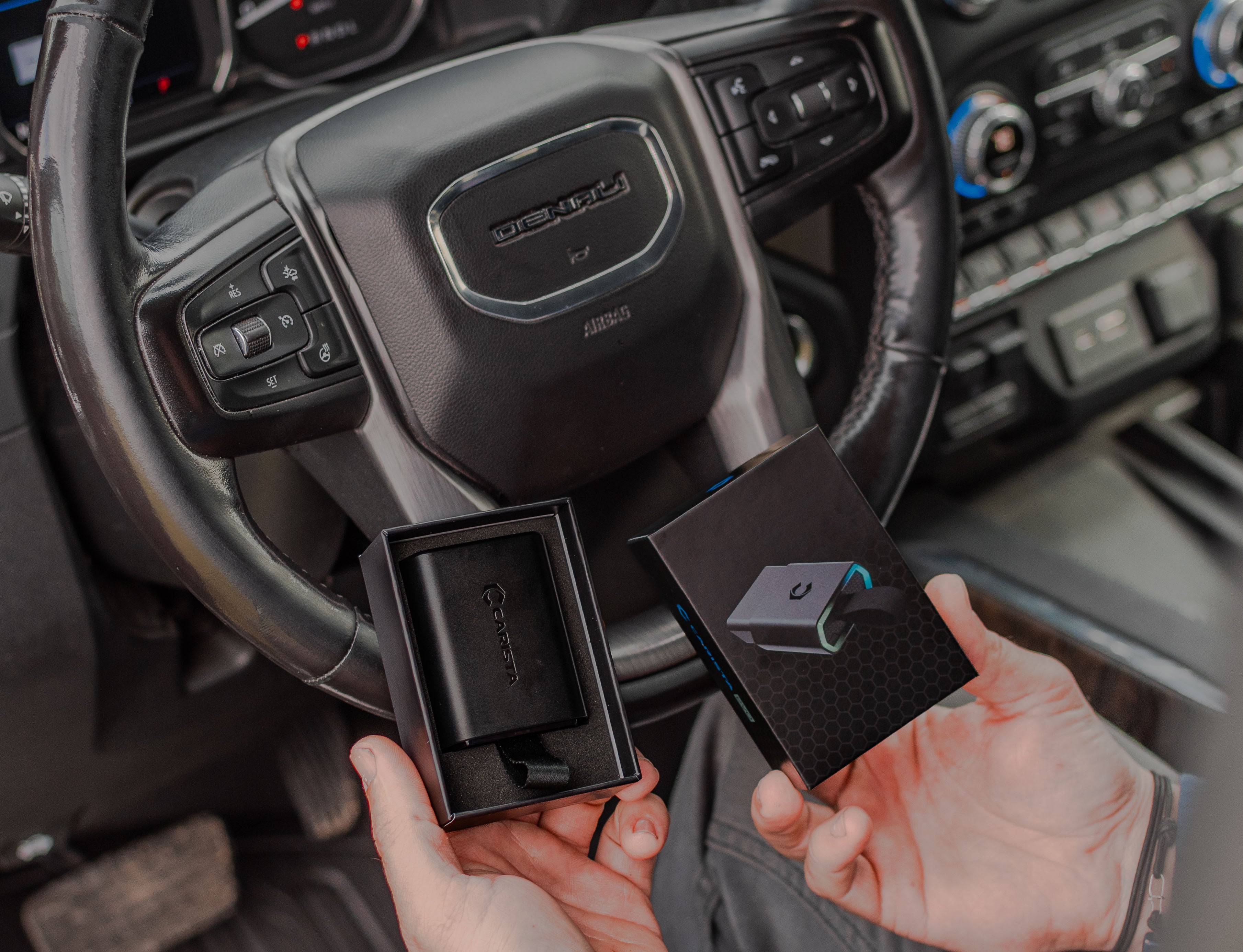
When your car’s heater stops working at home or away, Carista provides a user-friendly way to access diagnostics and live data from your phone.
With a compatible scanner, such as Carista EVO, you can gather useful information before deciding what needs professional attention.
Two features are particularly relevant:
- Engine coolant temperature live data: Helps you observe engine warm-up and temperature behaviour.
- HVAC diagnostics and live data: Provides additional information from the heating, ventilation, and air conditioning system on supported vehicles.

A practical way to investigate the problem
- Check coolant levels with the engine cold. Address a low level or suspected leak first.
- Read and save fault codes. Check engine and HVAC modules where supported.
- Observe coolant temperature during warm-up. Compare the pattern with manufacturer specifications.
- Review available HVAC live data. Record relevant readings alongside the symptoms.
- Share the findings with your technician. Include recent repairs and when the heating problem occurs.
Diagnostics can help narrow the investigation. They cannot independently confirm every blockage, coolant-flow problem, or mechanical failure. No stored codes does not mean the heating system is fault-free.
Operate the app while safely parked. Check Carista vehicle compatibility and applicable subscription requirements before buying.
What if the blower motor is not moving air?
A heater not working in a car may mean cold airflow, weak airflow, or no airflow at all. These require different checks.
If air barely comes from the vents at any temperature setting, the investigation should include the blower motor, its controls, the electrical supply, and airflow restrictions. Haynes distinguishes blower faults from cases where airflow is present but insufficiently warm.
An electrical issue affecting the fan can stop warm air from reaching the cabin even when heat is available. Tell your technician whether the problem concerns temperature, airflow, or both.

FAQs: car heater blowing cold air
Why is my car heater blowing cold air when the heat is on?
Once the engine has warmed up, possible causes include low coolant levels, trapped air, a faulty thermostat, restricted heater core flow, or a temperature control problem. Start with a cold coolant-level check and establish whether the engine reaches its expected operating temperature.
Why does my car heat work while driving but turn cold at idle?
This pattern can suggest insufficient coolant flow, including low coolant, air pockets, or a circulation problem. It does not identify a failed part on its own. Check the coolant level when cold and arrange testing if the symptom persists.
Why is my car’s heater cold on one side?
Check the individual temperature settings first. If both sides are set equally, a blend door or actuator fault is one possibility. Uneven heater core performance can also cause temperature differences, so an actuator should not be replaced without diagnosis.
Can low coolant stop a car heater working?
Yes. Insufficient coolant reaching the heater core can reduce cabin heat. If adding the correct coolant restores heating but the level later falls again, investigate the cause of the loss.
Why is my heater blowing cold air after a coolant change?
An incorrect fill level or trapped air is a possible explanation. Have the coolant level and the manufacturer’s bleeding procedure checked, particularly if the heater worked before the service.
Can I drive with my heater blowing cold air?
It depends on the cause. Stop if the engine overheats, a temperature warning appears, or there is significant coolant leakage. You must also be able to keep the windscreen clear; inadequate demisting can make driving unsafe.
Will adding coolant make my heater work again?
It may help if low coolant is the cause. It will not fix the underlying leak, a faulty thermostat, a damaged actuator, or a blocked heater core. Check and refill only when the engine is cold, using the specified coolant.
Can electrical problems cause a car heater to stop working?
Yes. Electrical problems affecting the blower motor, temperature actuators, wiring, or climate controls can interfere with heating or airflow. Testing is needed to distinguish an electrical fault from a coolant or mechanical problem.
Does low AC refrigerant affect car heat?
In a conventional system that uses engine coolant for cabin heating, low AC refrigerant is generally not the first explanation for lost heat. Some electric vehicles use heat pumps, where refrigerant-system faults can affect heating.
Can Carista help diagnose a heater problem?
On supported vehicles, Carista can read relevant fault codes and display coolant temperature and HVAC live data. These checks can help direct further testing, but mechanical faults may still require professional inspection.
*Disclaimer: The information provided in this article is intended for educational and informational purposes only and should not be considered as professional advice. While we strive to provide accurate and up-to-date content regarding OBD2 tools, diagnostics, and related automotive issues, the specifics of each vehicle may vary.
*Always consult your vehicle’s manufacturer guidelines and consider seeking professional assistance when dealing with complex or critical diagnostic issues.